


ATM Gas Attack Protection for UK Cash Sites
A gas attack against an ATM is not simply a cash-loss event. It can cause severe damage to the machine, building fabric and surrounding public area, interrupt branch or retail operations, and create a serious risk to staff, customers and emergency responders. Effective ATM Gas Attack Protection therefore needs to protect more than the cash cassette. It must reduce the opportunity for attack, detect suspicious activity early and support a controlled response.
For banks, building societies, independent ATM deployers and operators of public-facing cash sites, the right approach is layered protection designed around the location, operating hours and local risk profile.
What ATM gas attacks mean for site security
Gas attacks are intended to force access to an ATM cash safe using an explosive pressure event. Even where the offender fails to obtain cash, the consequences can be extensive. A damaged ATM may require specialist inspection, replacement components, structural repairs and a prolonged period out of service. In a retail or transport setting, that disruption can affect tenant operations, public access and the wider perception of site safety.
The risk is not identical at every location. A remote external cashpoint may require a different protection strategy from an ATM positioned within a staffed branch, supermarket vestibule or secure commercial estate. Visibility, vehicle access, nearby escape routes, hours of footfall and the construction of the surrounding façade all influence the security design.
This is why standalone equipment is rarely enough. Protection should be treated as part of the site’s wider physical security infrastructure, with clear ownership, tested procedures and reliable ongoing support.
Building an effective ATM Gas Attack Protection strategy
The strongest installations combine deterrence, delay, detection and response. Each layer has a role. Physical measures make the ATM and its surrounding structure harder to compromise. Detection provides early warning of unusual activity. CCTV gives operators and responding teams the situational awareness required to assess an incident quickly. Access control limits unauthorised entry to areas around internal or through-the-wall ATMs.
Specialist ATM protection systems can detect indicators associated with an attempted gas attack and trigger an immediate protective response. The precise technology should be selected carefully against the ATM model, cassette configuration, manufacturer requirements and insurer expectations. Compatibility, installation quality and commissioning are as significant as the device itself.
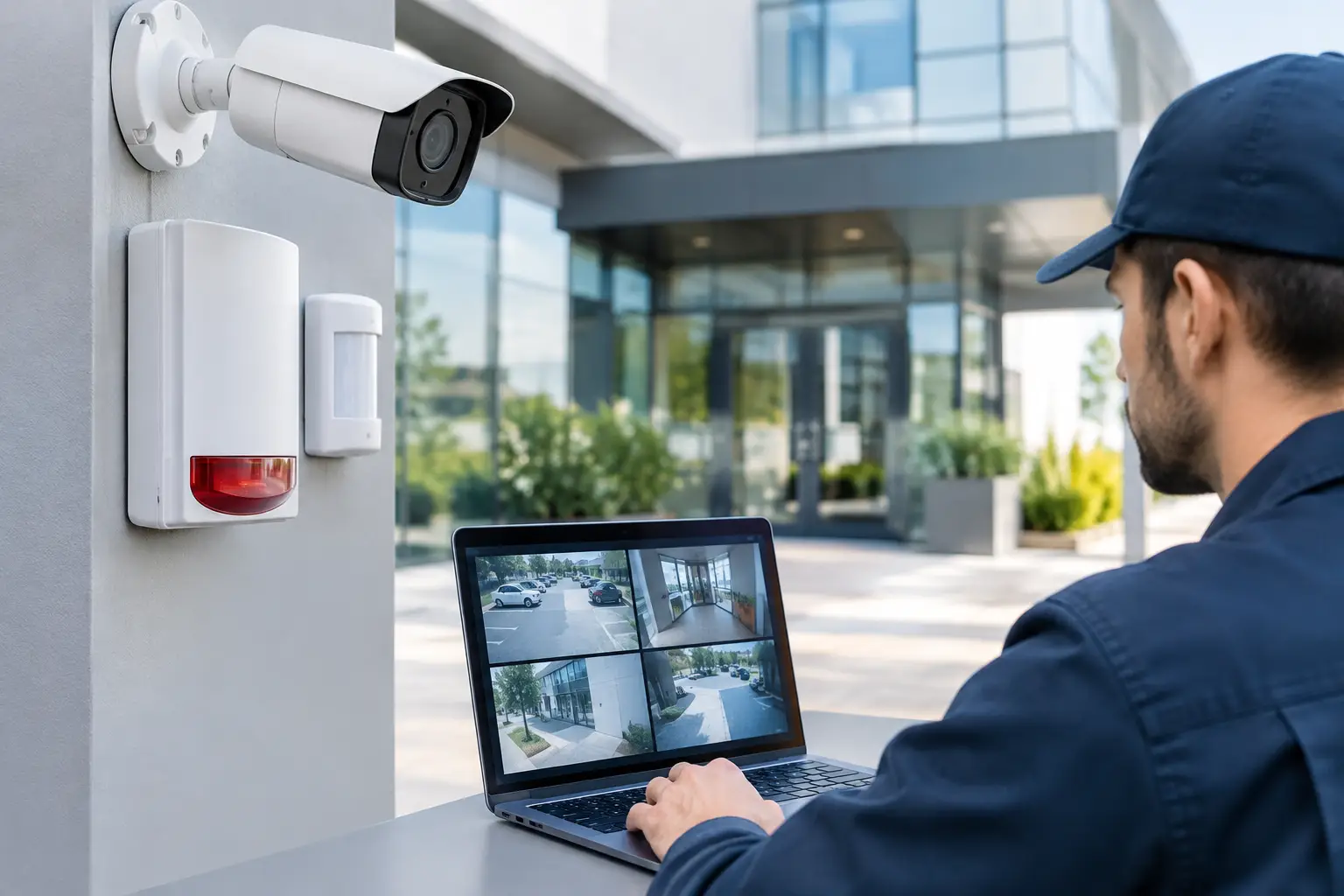
For many sites, the most effective design also includes monitored intrusion detection and professionally positioned cameras. Camera coverage should capture approaches to the ATM, the immediate operating area and key routes away from the site, while avoiding blind spots created by signage, canopies or poor lighting. Recorded video is valuable after an incident, but live alarms and verified monitoring can improve the opportunity for a timely response.
Design around the whole ATM environment
An ATM does not operate in isolation. Consider the service room, rear access route, electrical containment, adjacent doors and external approach. Weaknesses in any of these areas can undermine investment in the machine itself.
For internal sites, intelligent access control can restrict technical spaces to authorised personnel, create an auditable record of entry and allow permissions to be changed immediately when contractors, employees or operating arrangements change. Steel security doors, secure locking and intrusion detection may be appropriate where the rear of an ATM opens into a vulnerable service area.
For external locations, perimeter conditions matter. Good illumination, clear lines of sight and appropriate barriers can reduce concealment and restrict unauthorised vehicle access. These measures should support legitimate cash-in-transit and maintenance activity rather than create unnecessary operational friction.
Detection only delivers value when response is planned
An alarm without a response path can leave an operator with information but no control. Before commissioning an ATM protection system, establish what happens when an event is detected: who receives the alarm, who verifies the condition, when emergency services are contacted and how the area is made safe.
Procedures should distinguish between a confirmed attack, a fault condition and a false activation. Staff should never be expected to investigate a potentially dangerous ATM incident themselves. Their role is to follow a clear escalation process, protect people and preserve the scene for responding authorities and forensic investigation.
Remote monitoring, cloud-managed video and integrated alarm reporting can make multi-site oversight more efficient, particularly for estates with limited on-site security resources. However, remote technologies rely on resilient communications, appropriate cyber controls and a defined support model. A solution that works well in a busy urban branch may need additional communications resilience at an isolated cash site.
Installation, testing and lifecycle support
ATM protection is specialist work. Poorly routed cabling, unsuitable sensor positioning or incomplete integration with alarms and cameras can compromise performance and complicate future maintenance. It can also create avoidable issues when the ATM is serviced, upgraded or replaced.
A competent delivery partner should begin with a site survey and risk assessment, then coordinate the solution with ATM suppliers, building requirements and operational teams. Installation should be followed by commissioning, functional testing, user handover and documented maintenance arrangements. Periodic inspection remains essential because site layouts, lighting, occupancy and threat levels change over time.
Loktec Security Group brings ATM protection together with CCTV, intrusion alarms, access control, locksmith capability and nationwide service support, helping organisations manage the security of the whole environment rather than a single point solution.
The most valuable outcome is not simply an ATM that is harder to attack. It is a cash site where security teams can detect risk earlier, respond with confidence and restore normal operations with less disruption when an incident occurs.



Comments